A woman steps into the courtroom, composure in her posture, fire in her gaze. This isn’t her first time facing Harvey Weinstein across the aisle. It’s her third. And when she speaks, her words cut through years of denial, power plays, and silence: “He treated me like he owned me.”
That single sentence—delivered by British actress Annabella Sciorra during Weinstein’s 2020 criminal trial—became one of the most searing indictments of the disgraced producer’s reign of coercion and control. Her testimony wasn’t just a recounting of assault. It was a dismantling of a system that enabled predators to operate unchecked in plain sight.
This article examines the gravity of Sciorra’s testimony, the legal weight of repeat witness accounts, and what her courage reveals about the mechanics of abuse in Hollywood’s power corridors.
The Power of Repeated Testimony in High-Profile Trials
In criminal proceedings, especially those involving sexual violence, the credibility of survivors often hinges on consistency, detail, and emotional authenticity. When a victim testifies more than once—whether across different trials or legal phases—it can serve both as a strength and a vulnerability.
Sciorra first testified in Weinstein’s New York trial in 2020, then again during his Los Angeles trial in 2023, and once more during a subsequent phase of legal proceedings. Each time, she reconstructed a traumatic episode from the early 1990s: Weinstein allegedly forcing his way into her apartment, assaulting her, and leaving her emotionally shattered.
Her repetition wasn’t redundancy—it was reinforcement.
The legal significance of multiple testimonies lies in their cumulative impact: - Consistency over time counters defense claims of fabricated memory. - Detailed recall of sensory and emotional elements (smells, sounds, dialogue) enhances credibility. - Public record establishes a timeline that can undermine claims of false accusation.
But repeating trauma exacts a personal cost. Each court appearance forces survivors to relive abuse under cross-examination, often in front of the very person who harmed them. Sciorra’s willingness to return, time and again, signals both resilience and the high stakes of holding power to account.
“He Treated Me Like He Owned Me”: The Language of Control
The phrase “he treated me like he owned me” resonates far beyond a personal grievance. It captures the essence of coercive control—a hallmark of abusive relationships, especially those embedded in structural power imbalances.
In Weinstein’s orbit, this control wasn’t just physical. It was professional, psychological, and financial. As a gatekeeper of Hollywood success, Weinstein wielded influence over casting, promotions, and careers. Saying “no” could mean professional exile.
Sciorra’s words reflect a broader pattern: - Access as currency: Meetings, roles, and introductions were contingent on compliance. - Isolation tactics: Victims were often invited to private spaces under false pretenses. - Gaslighting: Survivors report being made to feel complicit or delusional after assaults.
This isn’t just about one assault. It’s about a culture where talent was exploited as a commodity, and women’s bodies became transactional tools in an unspoken economy of favors.
Psychologists and legal experts cite such language—“owned,” “controlled,” “powerless”—as indicators of systemic abuse, not isolated incidents. When survivors use ownership metaphors, they’re revealing how abusers frame their victims: not as people, but as property.
Annabella Sciorra: From Sopranos Star to Reluctant Icon
Annabella Sciorra’s career spanned decades, from indie films like True Love to mainstream acclaim in The Sopranos. Yet, in the wake of the #MeToo movement, she became known less for her performances and more for her testimony.

Her decision to testify was fraught. Unlike some accusers who came forward with public statements, Sciorra was subpoenaed. She didn’t seek the spotlight—she was thrust into it.
Still, her presence carried weight: - She was one of the first high-profile actresses to accuse Weinstein of physical violence. - Her allegations involved forcible rape, not just misconduct, elevating the severity of the case. - Her credibility as a respected actress lent legitimacy to the prosecution’s narrative.
But with visibility came backlash. Defense lawyers questioned her memory, pointing to gaps in time and inconsistent statements. They highlighted that she never reported the incident to police at the time—a common critique of sexual assault survivors, despite research showing that trauma often delays or prevents reporting.
Yet, Sciorra’s testimony helped secure Weinstein’s conviction in New York. Though that verdict was later overturned on procedural grounds, the impact of her words endured.
Why Multiple Trials? Legal Strategy and Jurisdictional Limits
Weinstein faced separate trials in New York and California due to jurisdictional boundaries and the nature of the charges. Each trial targeted different incidents, different victims, and different legal standards.
The New York trial focused on two main accusers: Miriam Haley and Jessica Mann. Sciorra’s testimony was crucial not because it involved a chargeable offense—statute of limitations had expired—but because it demonstrated a pattern of predatory behavior.
Under New York law, prosecutors could introduce evidence of uncharged crimes to show a defendant’s modus operandi. Sciorra’s account, therefore, wasn’t just background—it was evidence of a blueprint: lure, isolate, assault.
In the Los Angeles trial, the stakes shifted. New accusers emerged. Charges included rape during a film festival and assaults on multiple women between 2004 and 2013. Sciorra testified again, not as the center of a charge, but as a symbol of continuity—a thread linking past and present abuse.
This repetition across trials illustrates a legal reality: powerful figures often evade accountability through jurisdictional loopholes, expired statutes, or weak initial evidence. Only through persistent, multi-front legal action can patterns be proven beyond doubt.
The Emotional Toll of Testifying—And Why Survivors Keep Coming Forward
Courts are not designed with trauma in mind. The process is adversarial, invasive, and exhausting. For survivors like Sciorra, testifying means: - Re-experiencing assault in vivid detail. - Facing hostile cross-examination. - Being publicly dissected by media and online commentators.
Yet, many continue to come forward. Why?
The answer lies in both personal healing and collective justice. For some, testifying is the first time they’ve been able to speak without fear. For others, it’s about preventing future harm.
Therapists working with survivors note that courtroom testimony can be re-traumatizing—but also empowering. “There’s a shift when someone says, ‘This happened to me,’ not in whispers, but in a room where the system is forced to listen,” says Dr. Lena Peterson, a trauma counselor specializing in sexual violence.
Still, the process remains flawed. Many survivors never report abuse, let alone testify. Fear of retaliation, disbelief, or career consequences silences countless voices. Sciorra’s willingness to endure the process multiple times underscores both her courage and the brokenness of a system that demands such sacrifice for basic justice.
The Legacy of #MeToo: Beyond One Trial
Sciorra’s testimony didn’t occur in isolation. It unfolded within the broader #MeToo movement, which erupted in 2017 after investigative reports exposed Weinstein’s decades of abuse.
The movement reshaped public discourse: - Over 200 powerful figures across industries faced allegations. - Companies overhauled HR policies. - Survivors found platforms to share stories without shame.
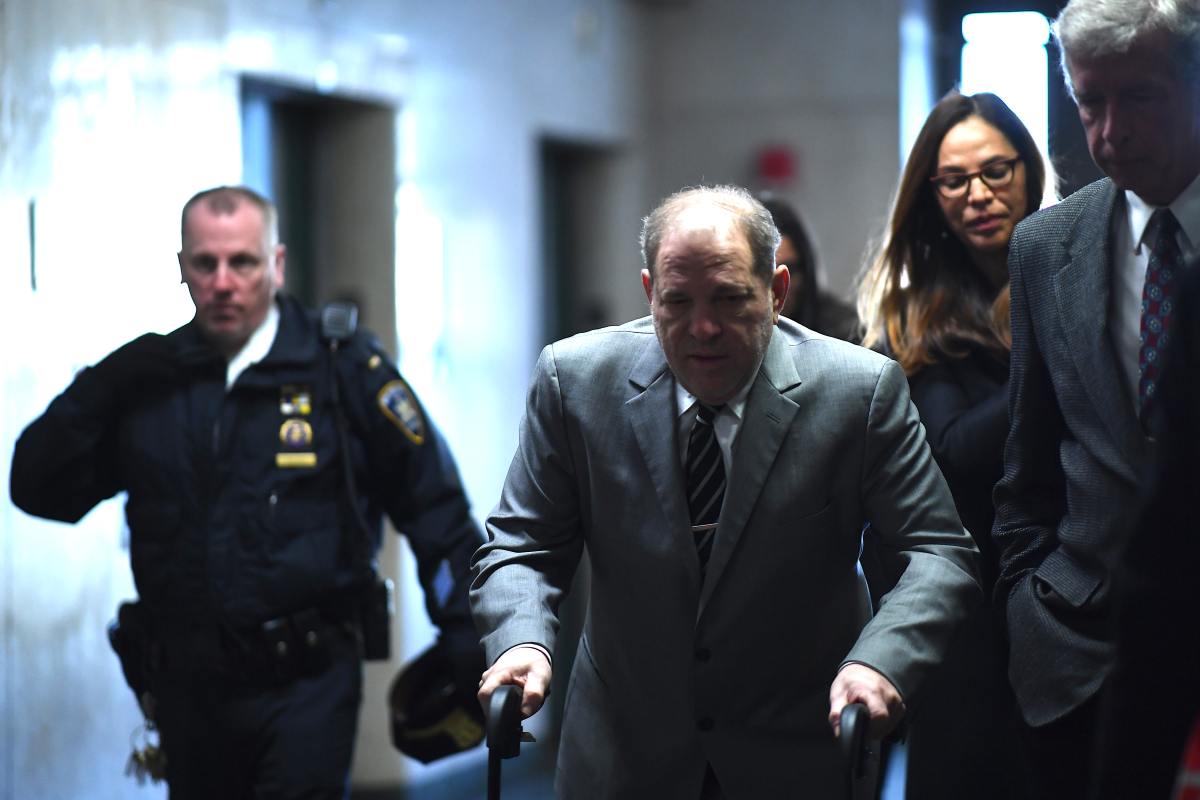
But momentum has waned. Some critics argue that #MeToo became performative—more about viral hashtags than structural change. Others note that while high-profile men were ousted, systemic issues persist: NDAs, unequal pay, and lack of accountability in closed industries.
Yet, Sciorra’s courtroom presence serves as a reminder: change isn’t linear. It’s built on repeated acts of courage, not one-off moments. Her third testimony wasn’t redundant—it was necessary. It proved that accountability requires persistence, not just revelation.
What Her Testimony Teaches Us About Speaking Up
Survivors often face a cruel paradox: they’re told to come forward, but when they do, they’re doubted, scrutinized, or ignored. Sciorra’s experience offers hard-earned lessons:
1. Memory isn’t perfect—and that’s normal. Trauma fragments recall. Gaps in timelines don’t invalidate abuse. Courts are slowly recognizing this, but bias persists.
2. Delayed reporting is common. The average time between assault and reporting is years. Fear, shame, and professional risk all play roles.
3. Power imbalances enable abuse. Weinstein wasn’t just a predator—he was a system. His ability to silence victims relied on control over careers, networks, and information.
4. Testifying isn’t about winning. For many survivors, justice isn’t a verdict. It’s being believed. It’s having their truth entered into the record.
5. Healing isn’t linear. Each time Sciorra returned to court, she reopened wounds. But she also reclaimed power.
The Road Ahead: Accountability, Reform, and Cultural Shift
Weinstein’s trials didn’t end abuse in Hollywood. But they exposed its machinery. Sciorra’s words—“he treated me like he owned me”—are now part of a larger reckoning.
Real change requires more than convictions. It demands: - Reforming statutes of limitations for sexual crimes. - Banning coercive NDAs in harassment cases. - Creating independent oversight in entertainment and corporate sectors. - Supporting survivors with legal, financial, and mental health resources.
Sciorra didn’t testify for fame or closure. She testified because someone had to. And in doing so, she reminded us that behind every headline, there’s a human being who survived—and who refused to be owned.
The next step isn’t just watching. It’s acting—by believing survivors, challenging power, and building systems where no one feels disposable.
FAQ
Why did Annabella Sciorra testify multiple times? She testified in both Weinstein’s New York and Los Angeles trials, as well as during appeals, to support pattern evidence and provide consistent survivor testimony across jurisdictions.
Was Harvey Weinstein convicted based on Sciorra’s testimony? Her assault allegation fell outside the statute of limitations, but her testimony helped prove a pattern of predatory behavior, contributing to his 2020 New York conviction.
Why didn’t Sciorra report the assault earlier? Like many survivors, she faced fear, shame, and professional risk. Reporting sexual assault, especially against powerful figures, often involves complex emotional and career-related barriers.
What does “treated me like he owned me” mean in legal terms? While not a legal term, it describes coercive control—a psychological tactic used by abusers to dominate victims, often through power imbalances in professional or personal relationships.
How common is repeated testimony in sexual assault cases? It’s rare but increasing, especially in high-profile cases where multiple jurisdictions or trials are involved. Survivors may testify more than once if new charges arise or appeals occur.
Did Sciorra face backlash for testifying? Yes. Like many survivors, she was scrutinized for memory gaps and the timing of her report. Defense lawyers challenged her credibility, a common tactic in sexual assault trials.
What impact did her testimony have on the #MeToo movement? Her status as a respected actress lent credibility to early #MeToo allegations. Her willingness to testify publicly helped normalize survivor testimony in legal and cultural spaces.
FAQ
What should you look for in Actress Details Abuse in Third Weinstein Trial Testimony? Focus on relevance, practical value, and how well the solution matches real user intent.
Is Actress Details Abuse in Third Weinstein Trial Testimony suitable for beginners? That depends on the workflow, but a clear step-by-step approach usually makes it easier to start.
How do you compare options around Actress Details Abuse in Third Weinstein Trial Testimony? Compare features, trust signals, limitations, pricing, and ease of implementation.
What mistakes should you avoid? Avoid generic choices, weak validation, and decisions based only on marketing claims.
What is the next best step? Shortlist the most relevant options, validate them quickly, and refine from real-world results.