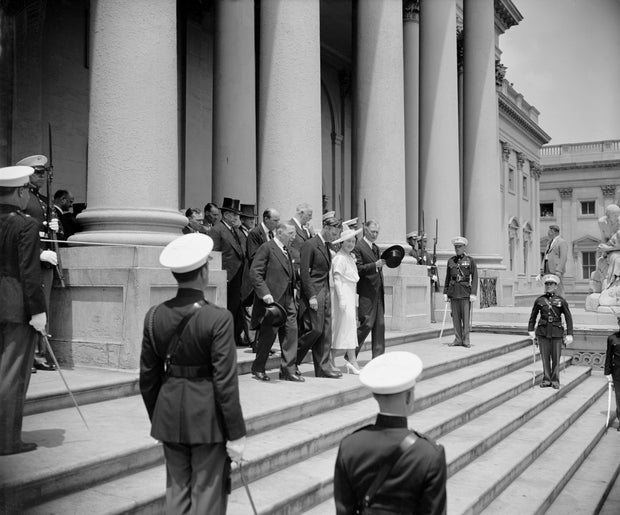
Photographs don’t just capture moments—they document power, diplomacy, and the evolving public image of the British monarchy. As King Charles III prepares for his first state visit to the United States, historic images of past royal trips resurface, each frame revealing more than just fashion or protocol. They reflect political climates, shifting Anglo-American relations, and the monarchy’s effort to remain relevant in a democratic world.
These visits are never just ceremonial. They’re strategic exercises in soft power—carefully choreographed efforts to reinforce alliances, heal diplomatic rifts, and humanize a centuries-old institution. The camera lens, often unblinking and omnipresent, turns private gestures into public narratives.
Let’s trace that narrative through the most significant royal visits to the US, using the visual record as our guide.
The First Royal Footprint: King George VI and the 1939 Visit Before D-Day, before the Cold War, before the special relationship was solidified in blood and strategy, there was a picnic.
In June 1939, King George VI and Queen Elizabeth (the future Queen Mother) became the first reigning British monarchs to set foot on American soil. Their train pulled into Niagara Falls, then on to Washington, D.C., New York, and even a stop at FDR’s estate in Hyde Park.
One iconic photo shows the King and President Franklin D. Roosevelt laughing over hot dogs at a barbecue. The image was no accident. Roosevelt, aware of the public relations value, insisted on informality. The King, usually reserved, smiles awkwardly, holding a bun. It was a deliberate thawing of imperial stiffness.
Why it mattered: - Broke centuries of British reluctance to visit former colonies - Humanized the monarchy ahead of WWII - Cemented FDR and George VI as allies in an era of rising fascism
The visit coincided with the New York World’s Fair, where the King delivered a radio address to millions. Photographs from that day show crowds waving Union Jacks and American flags side by side—an early visual testament to the special relationship.
Queen Elizabeth II: The Reigning Diplomat
No monarch visited the US more than Queen Elizabeth II. Over seven decades, she made 26 trips—each one marked by ceremony, symbolism, and an evolving public image.
1957: The Young Queen in Congress
Her first US visit as monarch came in 1957. At just 31, she addressed a joint session of Congress—the first British monarch ever to do so. One unforgettable photo shows her standing at the rostrum, poised and composed, framed by American lawmakers.
She spoke of shared values: freedom, democracy, and the defense of peace. The image radiated legitimacy—not just of her role, but of the monarchy’s place in the modern world.
Behind the scenes, her visit helped soothe post-Suez tensions. Though Britain had recently been humiliated diplomatically after invading Egypt, the Queen’s charm offensive reminded America that Britain was still a cultural and strategic partner.
1976: Bicentennial and the Revolutionary Reconciliation
In 1976, Queen Elizabeth visited the US for the bicentennial of American independence. The irony wasn’t lost on anyone—Britain’s monarch celebrating the rebellion that ended imperial rule.
Photos from this trip are rich with symbolism. She toured Boston, toured Philadelphia, and even lit a “midnight” lantern in Concord, Massachusetts—retracing Paul Revere’s ride. One striking image shows her smiling beside a colonial reenactor in a tricorn hat, a moment of theatrical reconciliation.
She also sailed on the newly restored HMS Ranger, a nod to John Paul Jones’s Revolutionary War ship. The gesture was small, but the imagery echoed loudly: respect for history without rancor.
1991: Gulf War Solidarity
:max_bytes(150000):strip_icc():focal(728x275:730x277)/princess-catherine-prince-william-donald-trump-king-charles-iii-trump-state-visit-uk-windsor-091725-8672599a27214b6f8ffdbb07fd7596e4.jpg)
During the Gulf War, Elizabeth made a surprise visit to US troops stationed in Saudi Arabia. While not on American soil, the trip included emotional meetings with American soldiers—photographs of which were widely circulated in US media.
One frame shows her shaking hands with a U.S. Marine, both in desert fatigues. Her presence boosted morale and reinforced the UK’s commitment to the coalition. It was royal duty as field diplomacy—quiet, personal, and effective.
Prince Charles: From Controversy to Continuity Before he was king, Charles made multiple trips to the US—some triumphant, others turbulent.
1995: Speaking Truth (and Controversy)
Charles delivered a speech at Manhattan’s Cooper Union in 1995, criticizing modern architecture. Standing before a backdrop of brutalist design, he called much of contemporary building “monstrous and meaningless.”
Photos from that day show him intense, even scolding—out of step with American architectural trends. The reaction was mixed. Some praised his conviction; others saw elitism.
The visit highlighted a tension that would follow him: Can a royal be authentic in a culture that values informality and self-made success?
2011: The William and Kate Effect
When Prince William and Catherine, Duchess of Cambridge, visited the US in 2011, the media frenzy was overwhelming. One photo from their trip to Los Angeles shows them grinning beside a giant panda at the zoo—a moment of lighthearted diplomacy.
Their youth, modern style, and apparent marital happiness offered a fresh image for the monarchy. American media ate it up. The royal brand, once seen as stuffy, suddenly felt aspirational again.
But Charles, then Prince of Wales, used the trip to promote his environmental foundation. While William made headlines for celebrity sightings, Charles gave quiet speeches on climate resilience—underscoring his long-term policy focus.
The 2023 State Visit: King Charles III Steps Forward
As King Charles III prepares for his state visit, the stakes are higher than ever.
The monarchy is navigating a period of profound change: the passing of Elizabeth II, scandals involving other royals, and questions about relevance in a post-imperial age. His visit isn’t just diplomatic—it’s a test of whether the institution can transition into a new era.
Photographs from this trip will be scrutinized. Will he stand too stiffly? Smile too little? Will Jill Biden and Kamala Harris share a warm moment with him, or will the images feel staged?
Early signals suggest a focus on climate and youth empowerment—issues that align with his decades-long advocacy. One expected photo op includes a visit to a green energy startup in Detroit, blending industrial heritage with environmental ambition.
Unlike past visits, this one occurs in a hyper-documented age. Every handshake, every glance, will be digitized, memed, and analyzed. The visual narrative will spread faster than any official press release.
But the goal remains the same: to show that the monarchy can adapt—without losing its essence.
The Power of the Royal Photo Op
Royal visits rely on visuals more than speeches. A single image can do what a hundred press statements cannot.
Consider these moments:
- Queen Elizabeth and Barack Obama dancing at a 2011 reception—her rare smile, his relaxed posture. It became a viral symbol of mutual respect.
- Prince Harry and Meghan Markle waving from the steps of a courthouse after their Sussex departure. The photo was stark, somber—marking an end.
- Charles and Camilla waving from a motorcade in New York, faces partially shadowed. The image? Open to interpretation.
Each photo tells a story beyond the event. They reveal public sentiment, media framing, and the monarchy’s emotional register.

Common photography pitfalls in royal visits: - Overly staged shots that feel detached (e.g., stiff handshakes) - Poor lighting that casts shadows on symbolic moments - Missed candid interactions that could humanize the royals - Cultural missteps captured on camera (e.g., inappropriate gestures)
The best royal photos feel spontaneous, even when they’re not. They show connection—not just protocol.
What King Charles III’s Visit Must Achieve
This isn’t just another trip. It’s a defining moment.
The US remains the world’s most influential democracy—and a nation with mixed feelings about monarchy. Charles must use this visit to:
- Reinforce the UK’s global role post-Brexit
- Personalize climate advocacy beyond policy papers
- Bridge generational gaps in public perception
- Honor tradition while signaling change
Photographs will be central to that mission. A warm moment with a young climate activist. A respectful nod to military veterans. A shared laugh with the First Lady.
These images won’t just document the visit—they’ll shape how Charles is remembered.
The Royal Brand in the American Imagination
The British royal family has long held a peculiar place in American culture—simultaneously admired and scrutinized.
Royal visits amplify that duality. Americans may reject monarchy in theory, but they’re fascinated by its spectacle. TV ratings spike during coronations. Tabloids thrive on royal drama.
And photos fuel that fascination.
When Queen Elizabeth rode horseback down Pennsylvania Avenue, or when Diana shook hands with AIDS patients, those images entered the cultural bloodstream. They became symbols of dignity, compassion, or resilience.
For Charles, the challenge is to create his own iconic moments—ones that define him not as Elizabeth’s son, but as a king in his own right.
A Legacy in Frames
As King Charles III steps onto American soil, he follows a long line of monarchs who used visits to shape history.
Each photograph from those trips is a data point—a glimpse into how the monarchy adapts, survives, and sometimes thrives in a world that no longer believes in kings.
The 2023 state visit will add new frames to that archive. Whether they show warmth, rigor, or misstep, they’ll be part of a larger story: the enduring, uneasy, yet vital relationship between Britain’s crown and America’s republic.
The cameras are ready. The world is watching.
Now, it’s time to make history—one photo at a time.
FAQ
Why are royal visits to the US considered state visits? State visits are formal invitations extended by the president to foreign heads of state. Though the UK has a constitutional monarchy, the monarch is recognized as a head of state, making these trips official diplomatic events.
How many times did Queen Elizabeth II visit the US? Queen Elizabeth II made 26 trips to the United States during her 70-year reign, including state visits, unofficial tours, and trips to Commonwealth events.
Did King Charles III visit the US before becoming king? Yes, Charles visited the US over 20 times as Prince of Wales, promoting causes like environmental sustainability, youth programs, and architectural preservation.
What makes a royal visit “successful”? Success is measured by diplomatic outcomes, media tone, public engagement, and the creation of positive visual moments that resonate beyond the trip.
Are royal visits funded by taxpayers? In the UK, the Sovereign Grant funds official royal travel. In the US, state visits are partially funded by the federal government, with added security and logistical support.
Do royal visits impact US-UK relations? While they don’t set policy, royal visits strengthen the symbolic “special relationship,” fostering goodwill that supports diplomatic and economic cooperation.
What’s expected during King Charles III’s 2023 state visit? The visit includes a White House dinner, meetings with civil society leaders, climate-focused events, and public engagements—blending tradition with modern advocacy.
FAQ
What should you look for in British Royal Visits to the US Through the Years? Focus on relevance, practical value, and how well the solution matches real user intent.
Is British Royal Visits to the US Through the Years suitable for beginners? That depends on the workflow, but a clear step-by-step approach usually makes it easier to start.
How do you compare options around British Royal Visits to the US Through the Years? Compare features, trust signals, limitations, pricing, and ease of implementation.
What mistakes should you avoid? Avoid generic choices, weak validation, and decisions based only on marketing claims.
What is the next best step? Shortlist the most relevant options, validate them quickly, and refine from real-world results.